
Source a Foam Wall Mural Around Your Artwork and Wall Size
For a foam mural made around your artwork, start with the wall drawing and the actual material base. Our existing 120cm-wide references offer IXPE/PET at 120 × 240cm and 2.3mm, or PET/IXPE/aluminium at 120 × 250cm and 2.5mm. Choose the surface, place the image and joins, then request a print sample and custom quantity against that defined construction.
Choose between Two Defined Material Bases
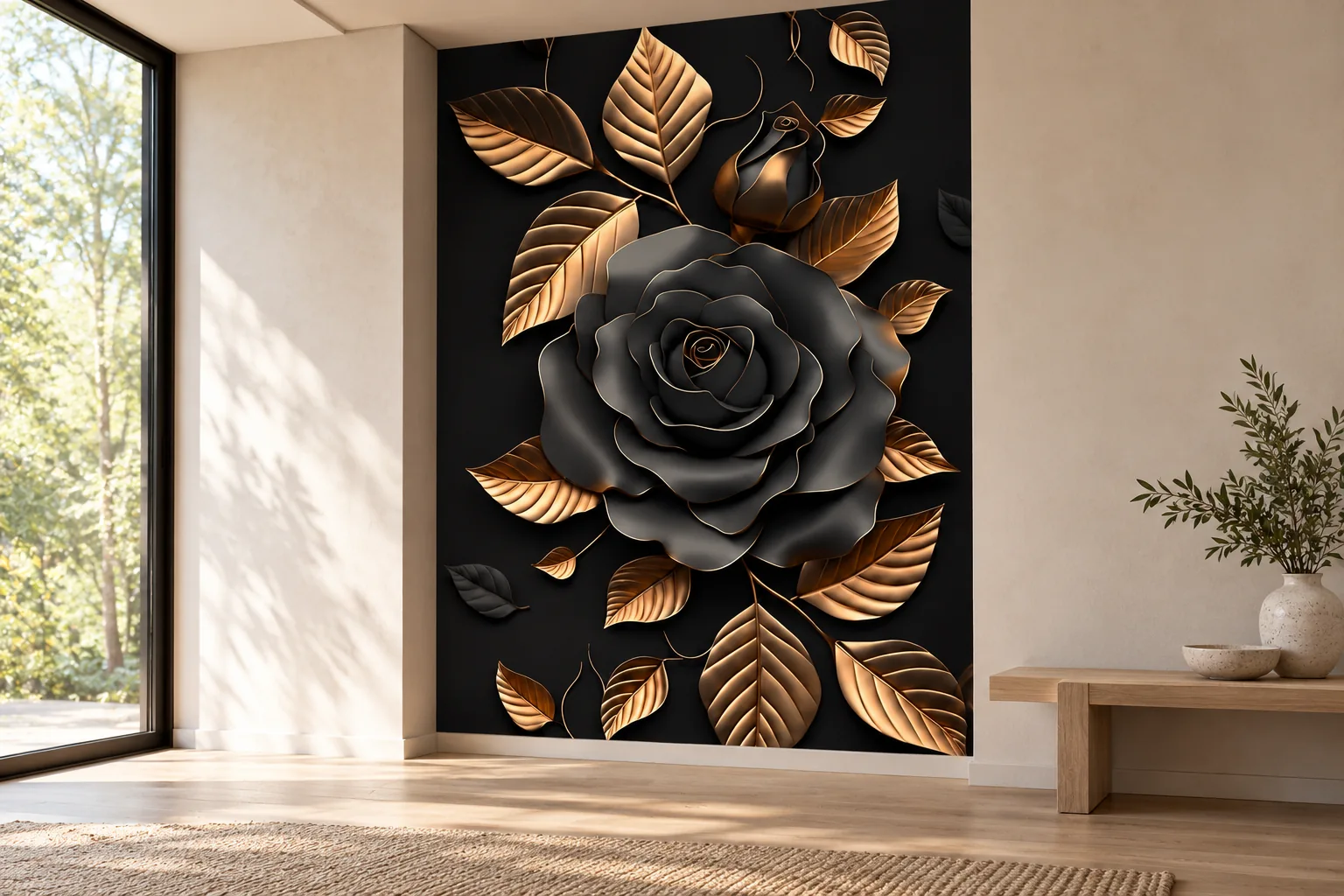
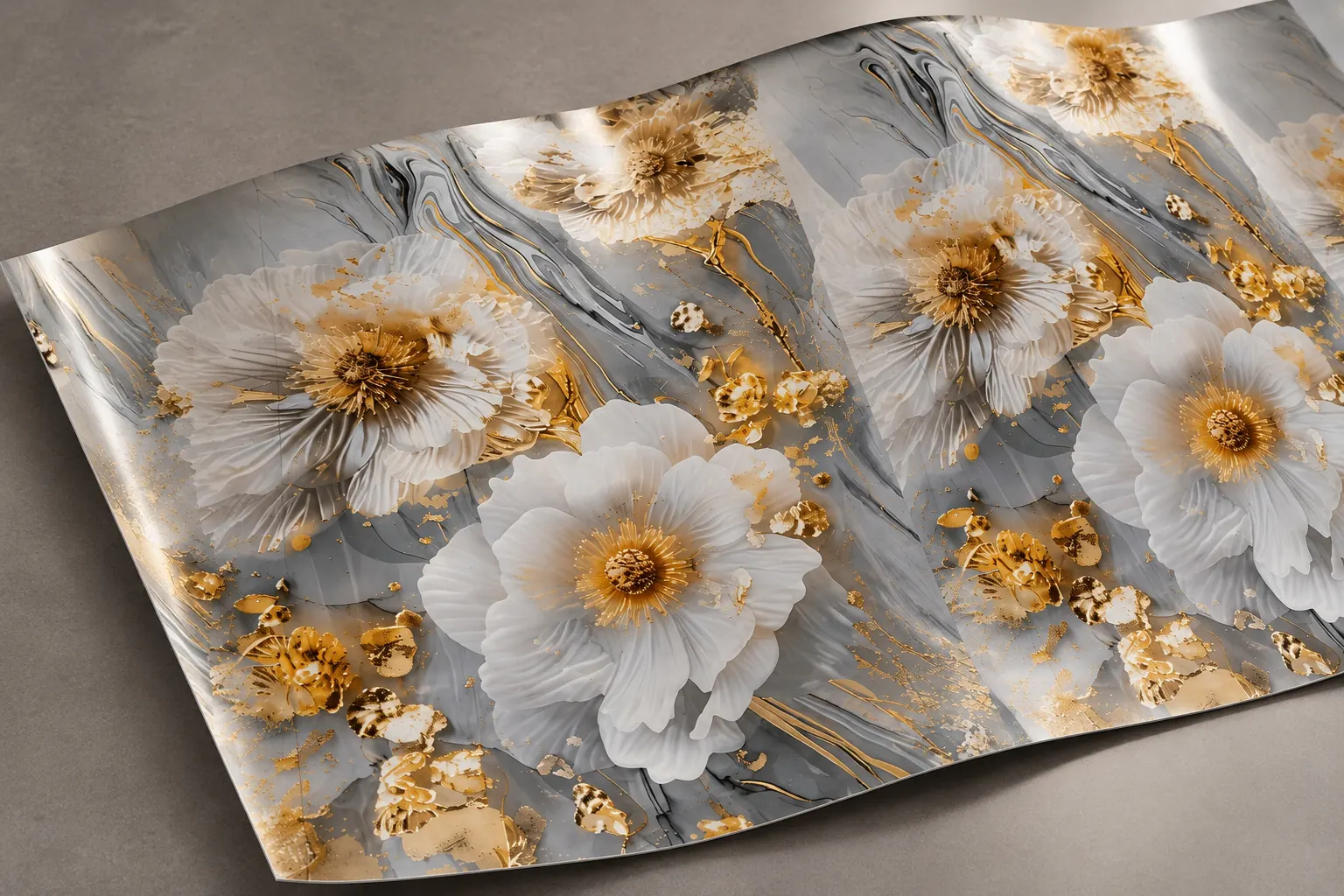
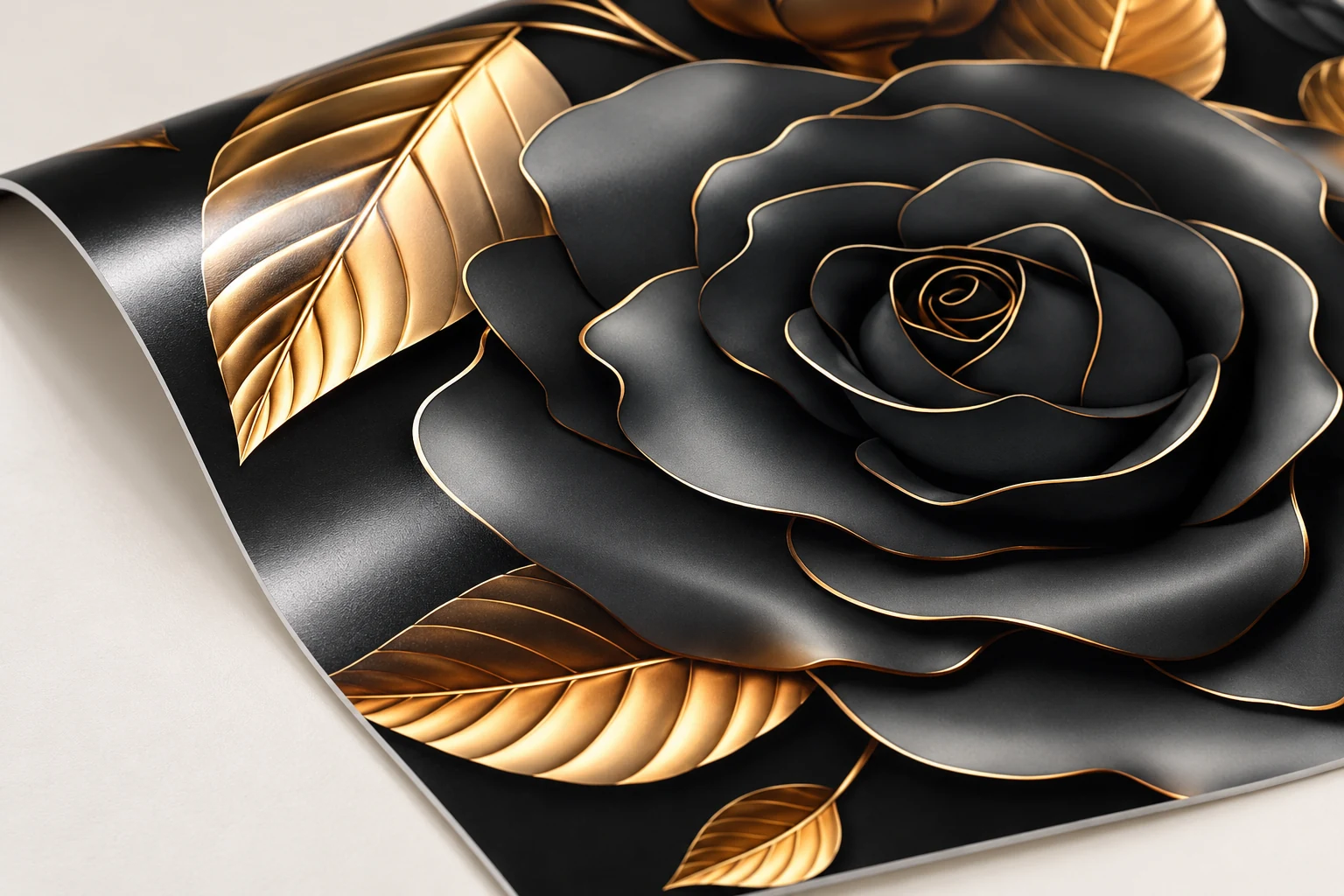
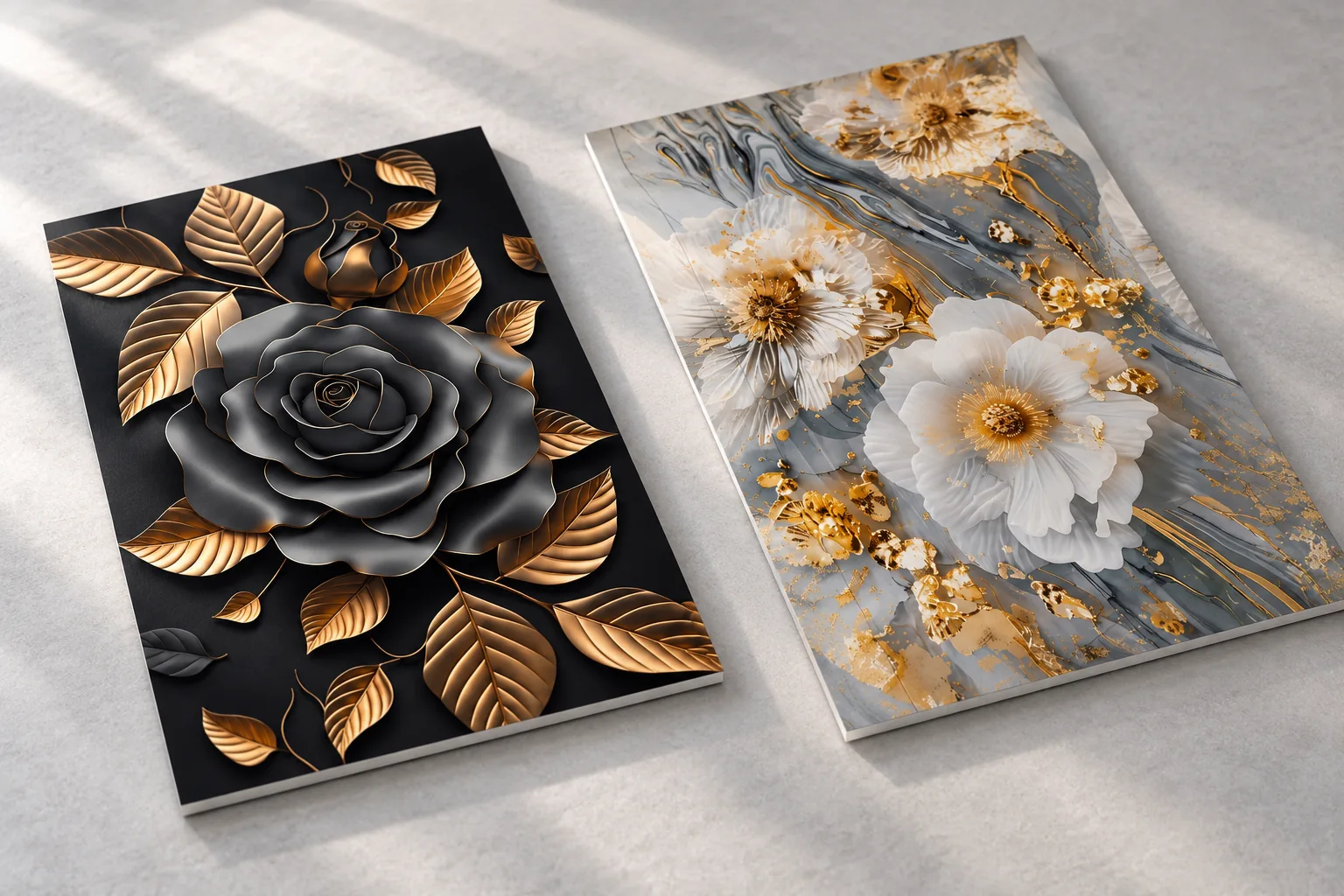
At Relia Wallpaper, these two existing murals provide clear material starting points for your artwork enquiry. The black/gold rose uses IXPE foam with glossy PET, at 120 × 240cm and 2.3mm, with a UV-printed fluorescent effect. The floral reference lists PET/IXPE/aluminium, 120 × 250cm and 2.5mm. Select the physical surface, then request the exact artwork, wall layout and custom supply terms.
| Existing mural | Construction/surface | Listed format |
|---|---|---|
| 18352 rose | IXPE foam +glossy PET; UV-printed | 120 × 240cm ·2.3mm |
| 18234floral | PET/IXPE/aluminium | 120 × 250cm ·2.5mm |
Place the Artwork within the Actual Wall Outline
Draw the wall at its measured width and height, then add doors, sockets, furniture and any area where the main image must remain visible. Mark the focal subject and horizon or vertical reference. Compare three possible treatments: fit the image within the wall, crop its outer area, or revise the composition. Distortion should be an explicit design choice rather than an accidental way to fill a rectangle. Include the original aspect ratio and the intended finished dimensions in the artwork brief, so a preview can be checked against the real wall.
| Artwork treatment | Buyer decision |
|---|---|
| Fit | Retain complete image; decide surrounding space |
| Crop | Approve lost edges and focal position |
| Recompose | Assess changed layout separately |
| Distort | Only if explicitly accepted |
A Floral Reference with a Different Construction
The floral reference is 10cm longer nominally than the rose mural and uses PET/IXPE/aluminium rather than the rose’s IXPE/PET combination. Compare both samples for finish, flexibility and the edge at a join. A 250cm supplied length may help a particular layout, but it does not establish the trimming margin for every wall. Show the required supplied size on your drawing.
Plan the Supplied Widths and Image Joins Together
Use the 120cm width to identify potential joins before treating the wall area as a purchasing quantity. For an illustrative 3.60m-wide × 2.40m-high wall, three 120cm-wide panels cover the width mathematically. Three existing 120 × 240cm rose pieces represent 8.64m², but leave no height or width allowance in that exact geometric example. The 120 × 250cm reference adds 10cm of nominal height, not a promised installation margin. The actual print bleed, trim, overlap or butt-joint arrangement must be agreed for the selected construction. A single wall image also needs an image sequence across those pieces.
| Illustrative 3.60 × 2.40m wall | Nominal result |
|---|---|
| 120cm widths | 3panels across |
| 3 × 120 × 240cm | 8.64m²; no geometric allowance |
| 120 × 250cm format | 10cm nominal extra height |
| Actual print/installation | Bleed, trim, joints and sequence to be agreed |
Use the Existing Print to Discuss the Physical Finish
Choose the finish as well as the picture. The rose reference describes waterproof, moisture-proof, anti-static, sound-absorbing and heat-insulating features. The floral reference describes waterproof, moisture-proof and mould-proof features. Review the actual face and edge beside the intended wall conditions; a measured acoustic or fire classification would need corresponding evidence for the selected assembly.
UV printing uses ultraviolet exposure to cure compatible ink. It is a print stage, separate from the foam-backed construction, and does not determine mural thickness or an acoustic rating. The existing rose is a UV-printed reference; the process for your proposed custom output belongs in its specific offer.
Define the Artwork and Sample Scope
Send the original artwork, finished wall dimensions and a full-wall preview. Mark the focal subject, openings and details that need to remain sharp after enlargement, and include reproduction permission. Use a layout proof to approve crop and panel sequence. Use a physical printed sample on the proposed base to judge colour, fine detail and surface response. Keep both approvals with the same file revision.
Keep the Reference Minimums with Their Own Products
Keep the existing quantity terms distinct. The rose mural states five cartons per design, but does not state pieces per carton in the source fields. The floral mural states a fifteen-carton minimum and twelve pieces per carton, which is 180 pieces at the standard minimum. At 120 × 250cm, that is 540m² of nominal material before cutting. These are existing-product reference conditions, not a custom-artwork quotation. A buyer needing a small number of project walls should show that quantity explicitly and ask how the custom proposal is priced and packed.
| Reference | Existing minimum | Known carton conversion |
|---|---|---|
| 18352 | 5 cartons per design | Pieces/carton not listed |
| 18234 | 15 cartons | 12 pieces/carton = 180 pieces |
| 18234standard nominal area | 180 × 1.2 × 2.5m | 540m² before cuts |
| Custom artwork | Separately offered | Do not inherit standard terms automatically |
Approve the Material and Picture as One Intended Result
Approve the picture and material together. Keep the construction, thickness, surface, finished image size, file revision, panel order and joint treatment beside the accepted sample. Check that image features meet across adjacent panels and the focal subject sits correctly on the wall drawing. A change in crop, material or supplied width needs a fresh check of the affected parts before the custom order is agreed.
Send the Wall Layout and Quantity with the Artwork
Send the RFQ with both the wall drawing and artwork, plus the selected existing material reference. State the number of walls, the intended panel arrangement, the required finished image and any sample needed before commitment. Separate standard catalogue conditions from the requested custom quantity, proof work and packing. Ask the offer to resolve actual print feasibility, supplied dimensions, join method and delivery terms. This gives us a specific mural task and gives your installer a picture-and-material record, rather than an area total that leaves the important crop and seam decisions unresolved.
Connect Your Artwork to the Mural Format
Send the wall dimensions, openings and original artwork with the preferred IXPE/PET or PET/IXPE/aluminium reference. Show the crop, joining plan and number of walls, then identify the physical sample and custom quantity you want included in the offer.
Contact Qingdao Relia wallpaper Co., Ltd. Address: Shuyuan Road, Qingdao, Shandong, China.
Phone: +86 18561762631. Email: [email protected].
WhatsApp: 14042030971.
Send these details with your enquiry
- Wall dimensions, openings, wall count and proposed panel layout.
- Original artwork, crop priorities and reproduction permission.
- Preferred mural base, required sample and requested custom quantity.
- Select the actual mural base
Keep material, surface and thickness together.
- Place the full-wall image
Mark openings, focal subjects and crop.
- Define the panel sequence
Show supplied widths and intended joins.
- Request sample and order terms
Separate catalogue minimums from the custom proposal.