
Define What the Approval Reference Represents
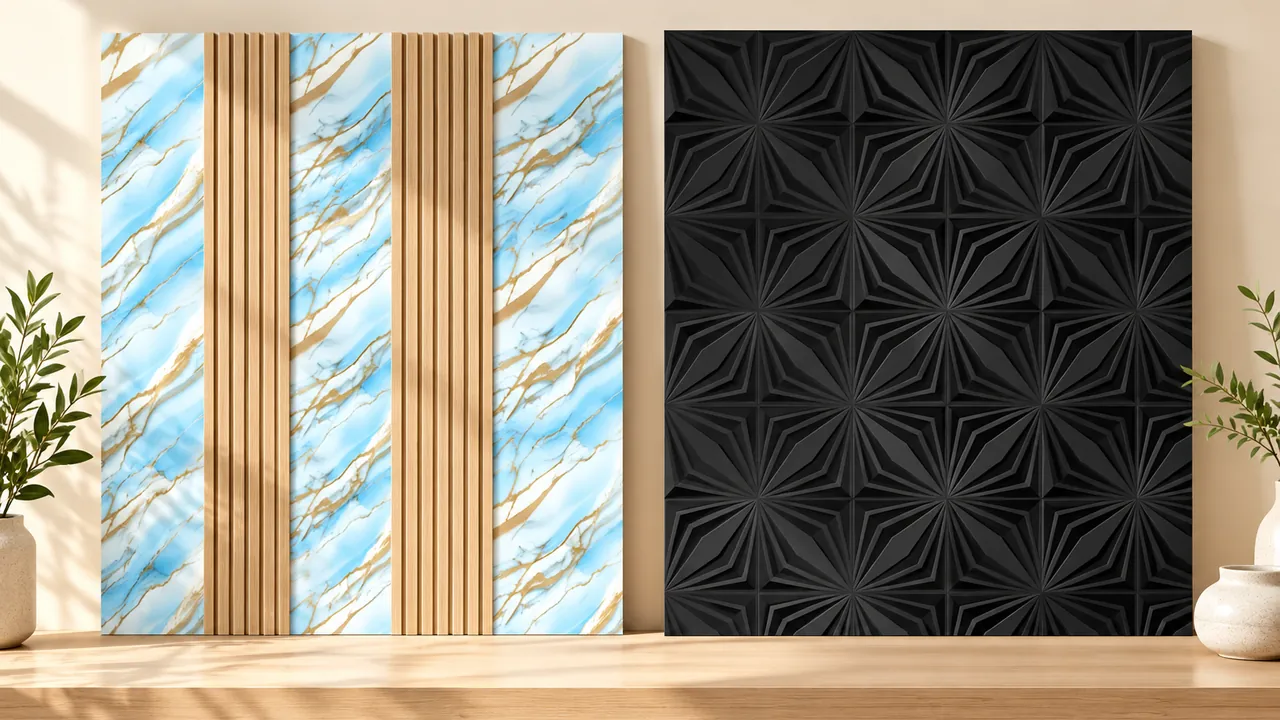
Approval is easier to communicate when the selected product and the appearance decision are recorded together. A blue marble-stripe wallpaper, a matte-black geometric panel and a glossy printed mural offer different finish references. Note the chosen design, colour, gloss, pattern direction and viewing conditions rather than relying on a loose image or an unlabelled sample.
For a business buyer, the useful question is what the review must decide. Are you choosing a general appearance, checking the selected product's physical finish, or approving the position of a large printed design? Those decisions may require different references. Identify the decision first, then ask what sample or artwork format can be arranged for the selected item.
When Is a Swatch the Right Question?
A small reference can be useful when the immediate decision concerns a selected colour, surface appearance or texture. For example, the brown stripe/plaid PVC wallpaper has a 0.45 × 10m roll format and Brown as its actual selection. A buyer could ask whether a sample format is available for reviewing that finish. The request should identify this wallpaper, rather than simply asking for “a brown sample.”
Keep the limits of the proposed review visible. A small piece does not show the arrangement of a whole wall or the full composition of a large mural. If the decision includes repeat direction, joins or image placement, ask for the additional reference needed to assess those points. Do not assume that every review format can be supplied for every product.
When Should a Whole Panel or Complete Artwork Be Discussed?
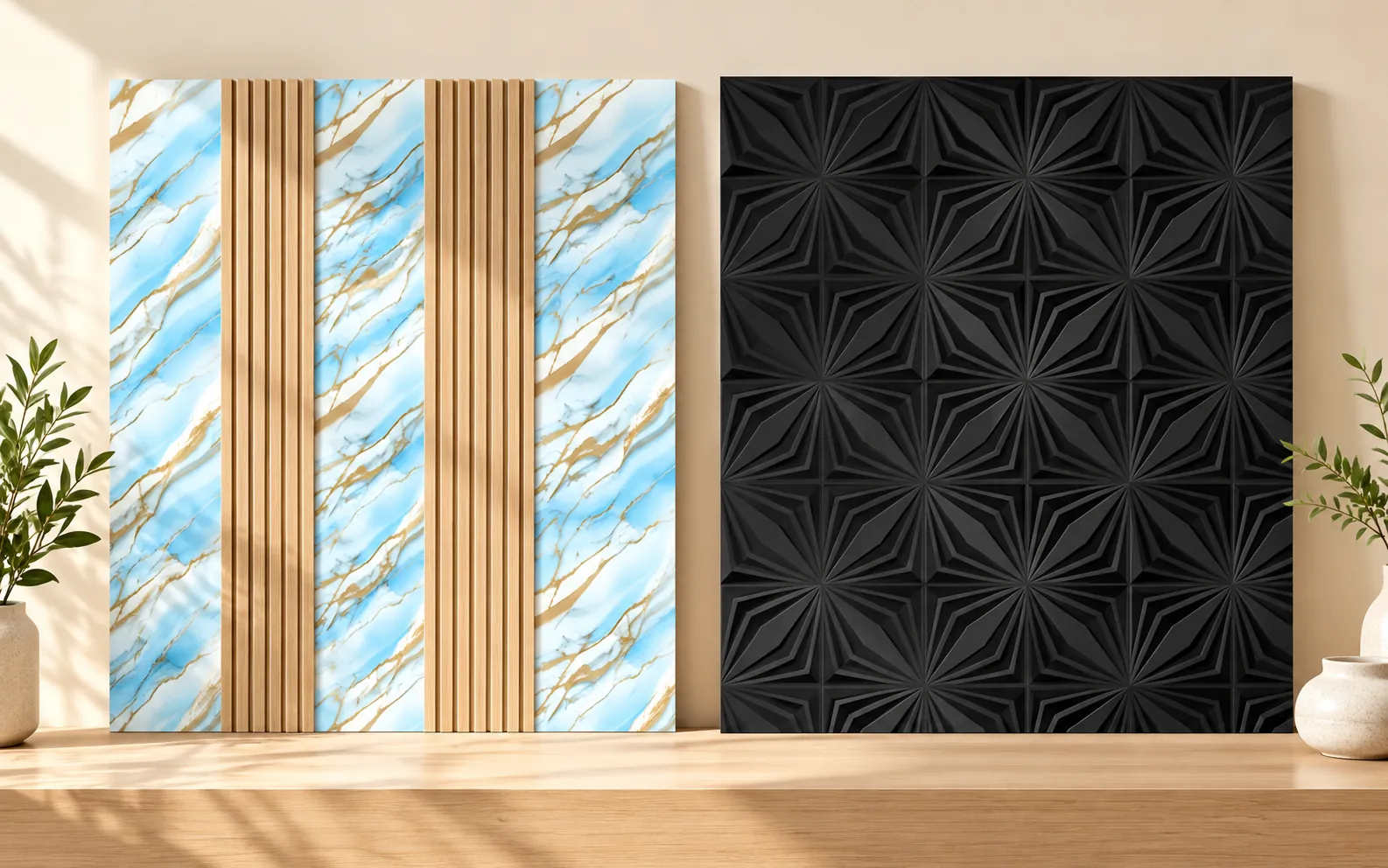
The matte-black geometric PVC panel is a 50 × 50cm, 3D-embossed reference with a stated 0.8mm thickness. When the buying decision includes the arrangement of the geometric design across panels, ask whether a whole-panel reference or another agreed view can be reviewed. A detail image and a full-panel view answer different questions.
The black/gold rose IXPE/PET printed mural uses a 120 × 240cm format. For this type of large-pattern product, discuss the complete artwork and its position within the supplied format. A close-up may help with a surface or printed detail, while the complete composition is needed to discuss where the principal design sits. Its 5D and UV-printed descriptions do not establish a measured physical relief depth or a verified outdoor UV-resistance grade.
Keep Physical and Digital References Distinct
Record whether the review used a physical sample, a whole item, a catalogue image or an artwork file. Screen images can help shortlist designs and communicate locations or pattern direction, but they do not by themselves establish an exact physical colour match. Keep the chosen image version with any physical reference the parties agree to use.
Before arranging a review, ask about the available format, quantity, charges and preparation conditions. Those are product-specific commercial questions. This checklist does not establish a free-sample offer, a dispatch schedule or an automatic credit against a later order.
Review Colour, Gloss and Texture Separately
A single word such as “finish” can hide several decisions. The selected colour, the appearance of the surface and the intended pattern should be recorded separately, even when they are reviewed at the same time. This makes it easier to explain what is approved and what still needs discussion.
Colour and Actual Design Choice
Use the real selection reference for the product. Matte black is the actual choice on the geometric PVC panel. The blue marble-stripe PVC/vinyl wallpaper instead asks the buyer to choose from the catalogue. Keep the agreed catalogue reference with the blue marble-stripe appearance rather than assuming that a general colour name identifies the entire design.
Gloss or Surface Appearance
The panel's matte appearance differs from the glossy surface of the printed mural. Record the finish attached to the selected product, and ask about any project-specific gloss requirement before approval. These descriptions are useful selection facts; they do not supply a shared numerical gloss tolerance.
Texture and Visible Design
The blue marble-stripe wallpaper is embossed, while the geometric PVC panel is described as 3D embossed. Identify the actual reference and the visible texture being discussed. Do not turn a material-thickness value or a design label into an assumed relief measurement.
Record the Review Conditions
Note where and how the reference was reviewed. For a physical review, record the reference identity and the relevant lighting or viewing context. For an image review, keep the actual file or catalogue version used. The aim is to make the decision traceable, rather than to treat an informal photograph as a calibrated colour standard.
If a specified colour standard or numerical tolerance is important to the order, state it as a requirement and ask whether it can be agreed for the selected product. Do not write an unstated tolerance into the approval record. Similarly, a choice described as Multi or “choose from catalogue” needs an agreed design reference; it is not a defined colour standard.
Separate the Decision From an Open Question
Use plain statements in the review record. For example: “Selected product and catalogue reference recorded; embossed appearance reviewed; full pattern arrangement still to be agreed.” This is more useful than marking a whole product “approved” when a key element remains undecided. The example is a buyer-record format, not a claim about a completed order.
The sample and finish-approval guide provides the enquiry checklist. When the question concerns dimensions, material gauge or the exact supplied format, use the specification guide alongside the appearance record. A finish decision should not obscure a separate specification question.
Record Pattern Direction and Arrangement
Appearance approval should show how the selected design will be considered within the measured surface. A stripe, a geometric panel and a large mural do not create the same layout questions. Keep the intended direction, visible joins and principal artwork position with the product reference.
Stripes and Roll Direction
For the 45cm × 10m blue marble-stripe wallpaper, state the intended stripe direction and show the wall dimensions. Ask how the selected design should be arranged across the planned drops and visible joins. The stated roll size does not provide an unlisted pattern-repeat measurement, so request that information when it affects the layout.
The vinyl/PE-foam grille roll offers another directional example. Its supplied reference is 60 × 300cm, with size customization listed for that product. Describe the intended grille direction and requested format together. If a custom size is being discussed, preserve both the base product and the requested change in the record.
Panels and Repeated Geometric Designs
For a square geometric panel, note which way the reference is being viewed and how adjoining pieces are intended to relate. A simple labelled sketch can identify the chosen direction and important visible joins. Ask for the relevant fitting instructions rather than assuming a hidden joint system or a particular adhesive arrangement.
For the matte-black panel, its 50cm-square size and ordinary product functions do not by themselves establish the complete installed profile. If a projecting detail, edge relationship or profile dimension matters to the design, make that a separate specification question before relying on the appearance approval.
Large Mural Position
With the 120 × 240cm printed mural, identify the full artwork version and the area that must remain visible. Show measured openings, corners or furniture positions when they affect the chosen composition. This helps the enquiry distinguish approval of a design from approval of its intended position on a particular surface.
Keep any cropping or arrangement discussion explicit. A proposed illustration is not proof that every alternative artwork layout or custom print format can be supplied. Ask for the actual selected design and any requested change to be confirmed. Where a custom change is involved, link the approval record to the product-specific custom enquiry.
Joins, Cuts and the Measured Layout
Show the places where joins or cuts are important to the buyer, and request the information needed to assess them. Do not apply a fixed waste percentage or an assumed repeat length to every covering. Keep measured surface dimensions, product format and the proposed arrangement as separate inputs so that a layout question can be resolved without changing the identity of the product being discussed.
Keep the Record for an Order or Repeat Enquiry
A useful approval record is short enough to follow and precise enough to identify the decision. It should travel with the relevant quotation or order reference, rather than remaining as an unlabelled image in a message history. Agree which reference and version the parties will use.
- Product identity
- Product link or reference, selected design and actual option or catalogue choice.
- Supplied specification
- Full format, relevant thickness reference and any agreed change.
- Review reference
- Sample identification, artwork filename/version or catalogue image used, together with the review date.
- Appearance decision
- Colour, gloss, texture, pattern direction and artwork position actually reviewed.
- Open items
- Unresolved format, fitting, tolerance or commercial questions.
- Order connection
- The quotation or order reference to which the approval is intended to apply.
A Practical Two-Stage Example
Suppose a buyer first shortlists the blue marble-stripe wallpaper from a catalogue image. The initial record can identify the product, the selected catalogue design and the desired stripe direction. It should also say that the physical finish or any other required review remains open if that decision has not yet been made.
After an agreed review, the buyer can add the relevant sample or artwork reference and record the actual decision. If the supplied format or selected design changes during the enquiry, check whether that change affects what was reviewed. Do not silently attach an earlier approval to a different specification.
What Changes on a Repeat Order?
For a later enquiry, provide the previous product, design and approval references, then state the new quantity and any requirement for continuity of appearance. Ask what colour, batch or dimensional limits can be agreed for the new order. A retained reference helps identify the request; it does not create an identical-batch guarantee.
Review any new design, finish or format against the earlier record. If the project now has different lighting, a different substrate or a revised arrangement, explain those conditions as well. Keep the new quotation and specification identifiable so that the previous selection does not obscure a change in the current purchasing brief.
Send the product reference, appearance questions and relevant review record with the RFQ checklist. Sample availability, costs, approval arrangements and any actual order conditions remain matters to confirm for the selected item.