
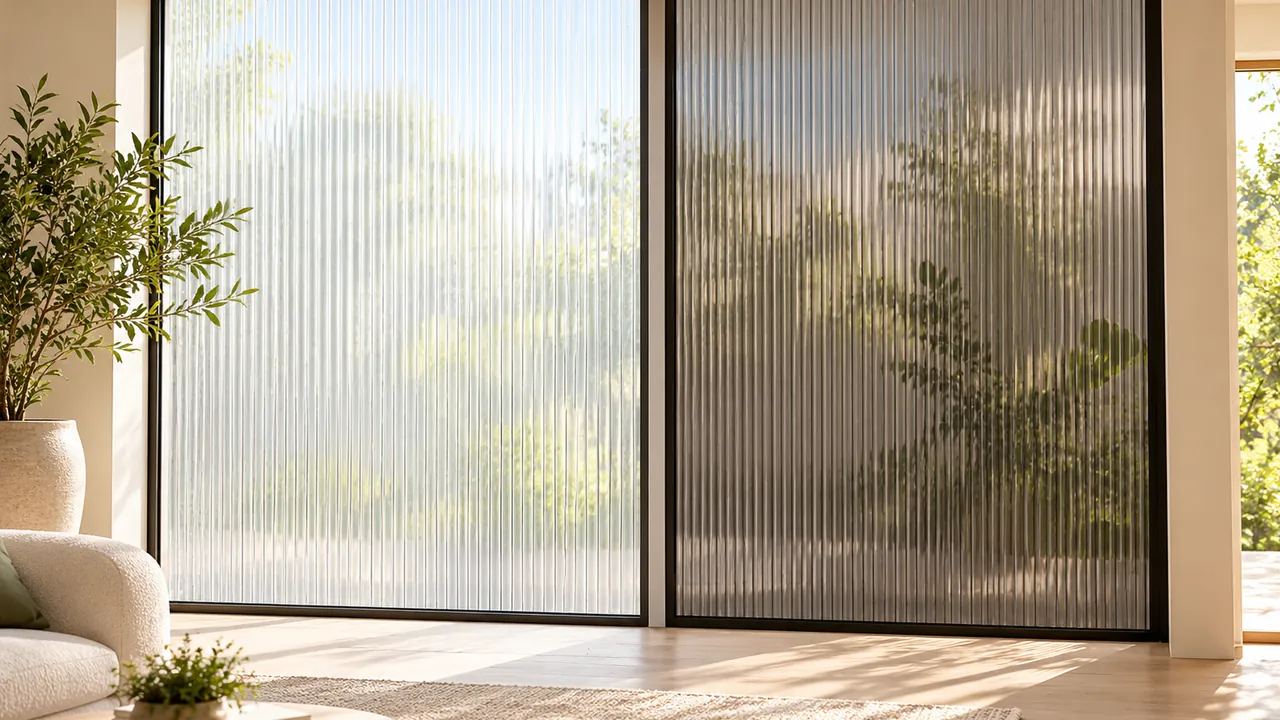
Window-Film Buying Guide
Start a window-film comparison with the attachment description, then connect it to the material, supplied dimensions and effect you want on the glass. Two films can share a reeded appearance while presenting different purchasing specifications.
Read the Mounting Type Before Choosing a Design
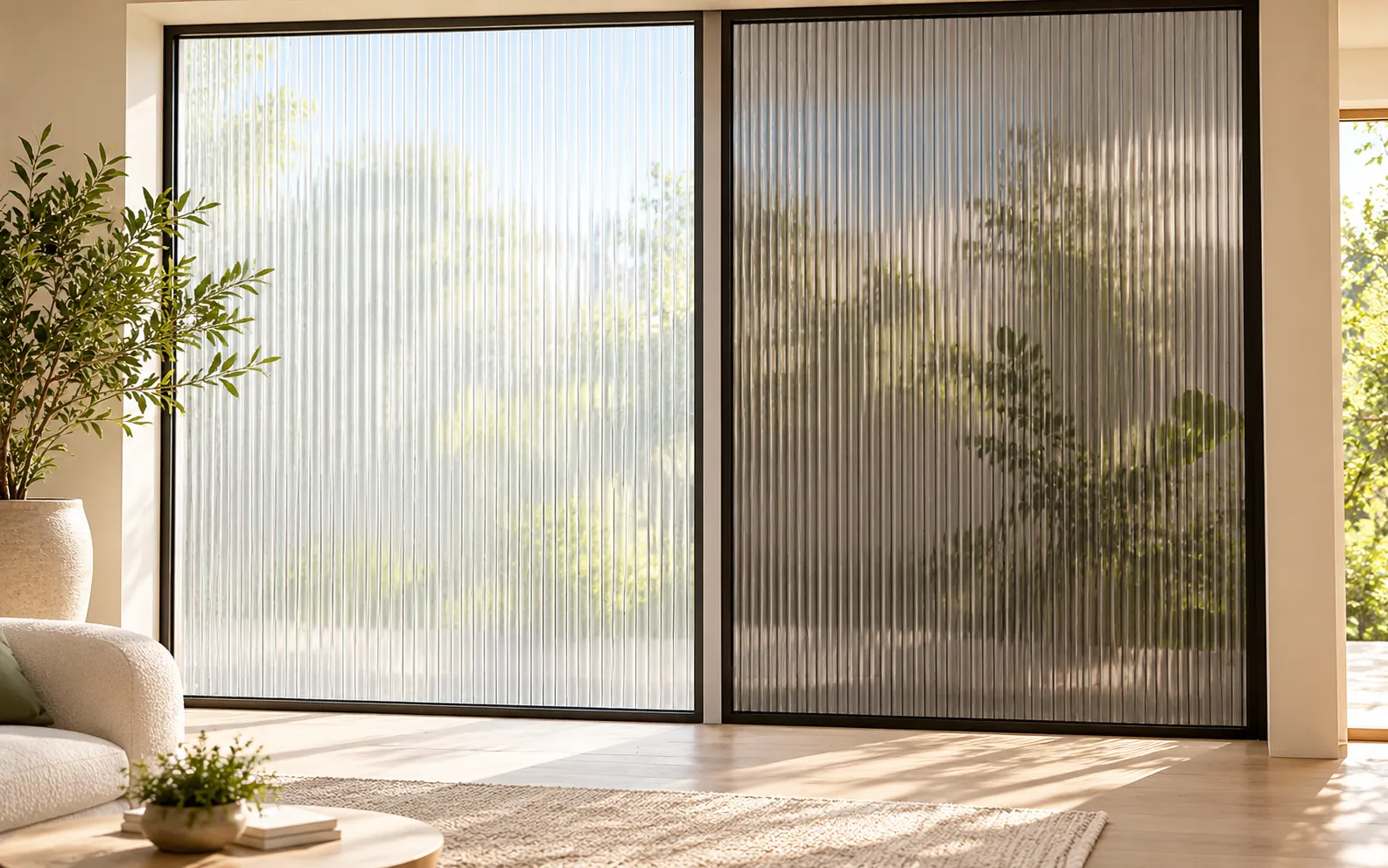
The two references used here give a practical starting point. The frosted/reeded PVC/PET film is described as non-self-adhesive, static-cling and removable. The fluted/reeded PET film is described as self-adhesive and removable. Keep these descriptions attached to their own products when requesting instructions or comparing a quotation.
Non-self-adhesive static cling
For the PVC/PET reference, static cling is part of the stated mounting description, rather than a conclusion drawn from the appearance. That gives the buyer a specific application method to discuss. Ask for the fitting instructions for the selected film and the actual glazing, including preparation, positioning, edge treatment and any recommended checks before the complete installation.
A useful brief identifies where the film will go and the result being approved. For example, an office partition and a glazed door can have different panel sizes, edges and viewing arrangements. Supply those details with the film reference. Describing the location as “glass” is a starting point, but a measured layout and information about its surface make the application enquiry more useful.
Self-adhesive PET film
The PET reference has its own explicit self-adhesive statement. Its installation conversation should therefore follow the selected adhesive-film instructions. Discuss preparation and application with that product in mind; a procedure received for a static-cling reference should not automatically become the fitting procedure for the PET selection.
Material and mounting are separate entries. PET identifies the listed material for this reference; it does not by itself define how every PET film attaches. Likewise, a decorative surface name such as fluted or reeded helps select the appearance, but it does not replace the product's mounting statement. Record all three together: product reference, material and stated attachment.
Removability under the actual fitting conditions
Both references include removability as an ordinary product feature. Use that information positively when discussing the project, and define the removal outcome you need. “Removable” should not be expanded into a universal residue-free promise for every glass surface and installation condition. Ask about the relevant removal procedure, the condition of the glass afterwards and any requirement important to the building or maintenance team.
The covering-selection guide places these film descriptions alongside wallpaper, panel and floor formats. This article focuses on the two film references so that a shared decorative look does not hide their different specifications.
Compare Materials, Width and Thickness Together
| Specification | PVC/PET static-cling reference | Self-adhesive PET reference |
|---|---|---|
| Material | PVC/PET description | PET |
| Listed width | 60, 90, 120 or 152cm | 152cm |
| Length | 50m | 50m per roll |
| Listed thickness | 0.20mm | Separate 0.10mm and 0.12mm references; confirm the supplied value |
| Minimum statement | One roll per model | One roll per model |
| Warranty description | One year | Two years |
Read across a complete product line rather than choosing the widest roll in one listing and the thickness from another. The selected PVC/PET film offers four listed widths with the same 50m length description. The PET reference provides a 152cm × 50m format. These are useful comparison facts, but the final quotation should identify the particular design, width and supplied thickness together.
For the PET reference, 0.10mm and 0.12mm are two separate listed thickness descriptions. They should not be rewritten as a continuous 0.10–0.12mm range or presented as every design automatically available in both values. Ask which value belongs to the selected reference and record it on the quotation. Where dimensional precision matters, include the measurement scope or tolerance that needs to be agreed.
Keep the actual option labels with the correct film
The static-cling reference uses the numbered labels 1, 2, 3, 4, 6, 7, 8, 9, 10, 11, 13, 14, 15 and 16. The self-adhesive PET reference uses 1, 2, 3 and 4. These are selection references; a number does not establish a named colour, transparency or pattern on its own. A label shared by the two products does not establish that their artwork is identical.
Send the product link with the label, and attach or identify the actual appearance you want confirmed. This is especially helpful when several projects or customers are being grouped into one enquiry. Keep each requested design on a separate line so that a numbered choice in one film is not confused with the same number in the other.
Match the roll format to measured glazing
Record the width and height of each pane or the intended covered area, the number of repeated panes and the direction you want for a reeded design. Identify any edges, frames, handles or divisions relevant to the proposed layout. Then compare those measurements with the selected roll width and the proposed cutting arrangement. The width of the roll alone does not decide the approved arrangement of joins or cuts.
Confirm the supplied combination before completing the layout. The specification guide explains how to carry dimensions and option references into a clear line item without creating an unverified width-by-design-by-thickness matrix.
What Glass and Privacy Details Should the Buyer Send?
Begin with the actual glazing rather than a general room name. Describe the glass type if known, any surface treatment or coating, the intended fitting side and whether the glazing is part of a door, window or partition. If a detail is not known, identify it as a question for the project team instead of substituting an assumption.
This information helps frame the compatibility enquiry for the selected film. Static-cling and self-adhesive labels do not independently establish suitability for every glass construction or coating. Request the instructions and application assessment for the actual item and glazing combination. The surface and application guide helps organise those details without turning a room label into a universal fitting instruction.
Describe the appearance you want to approve
Frosted, reeded and fluted wording helps identify the decorative effect to compare. Both references also carry several surface-treatment descriptions. The useful next step is to agree the actual supplied appearance for your selection, including pattern direction and the desired relationship to the surrounding glazing.
A short brief can explain whether the priority is a decorative pattern, screening a particular sightline, preserving a preferred view or coordinating a repeated design across several panes. Add an annotated photograph or simple drawing if it explains the requirement better than a colour name. Keep any agreed illustration with the product and option reference used in the quotation.
Agree lighting and viewing conditions
Privacy approval needs a viewing situation. Identify the sides from which the glass will be observed, the relevant viewing distance and the lighting arrangements that matter to the project. If both daytime and evening conditions are important, include both in the approval brief. This gives the supplier and buyer a shared way to discuss the required result instead of treating the word privacy as one fixed outcome.
The listings provide ordinary decorative, heat-insulating and waterproof features, alongside their privacy-oriented descriptions. If the project calls for a measured optical, UV or thermal value, state the required criterion and request evidence for the selected construction. A decorative name or ordinary feature statement should not be converted into a numerical rating that has not been agreed.
For approval, retain the actual film reference, glass details, fitting side and viewing conditions together. A review of appearance becomes more useful when the same conditions can be identified again during the purchase or installation discussion.
Build the Film Enquiry and Fitting Check
A film enquiry is strongest when the decorative choice and installation information appear in one brief. This avoids asking the company to quote an attractive image while leaving the actual glass, width or mounting requirement undecided. Start with a small set of definite product lines, then add the questions needed to complete each one.
Use a product-specific enquiry line
For the static-cling reference, identify the PVC/PET product, the actual numbered selection, the width you are requesting, 50m length and the listed 0.20mm thickness. For the self-adhesive PET reference, identify the actual selection, 152cm × 50m and the supplied 0.10mm or 0.12mm value to be confirmed. Write the quantity in rolls for each model and ask how that model is defined for the selected artwork and specification.
Both minimum statements are one roll per model. Keep that wording with the product rather than assuming that all designs can be mixed into a single minimum or that a carton has a particular number of rolls. If your purchase combines references, ask for the design allocation and packing arrangement to appear explicitly in the quotation.
- Product link and actual numbered reference, with the appearance to confirm
- Requested width, length and supplied thickness
- Quantity in rolls for each model or design allocation
- Measured panes, fitting side, glass type and known coatings
- Pattern direction, proposed cuts and any important joins or edges
- Required privacy effect and relevant lighting or viewing conditions
- Fitting, preparation, removal and evidence questions for that item
Connect a trial or sample to an approval reference
If a trial or sample is part of your purchasing plan, ask about its supply conditions and agree what it is meant to demonstrate. An appearance sample, a fitting trial and a request for performance evidence serve different purposes. Identify which result you want to review, then retain the selected reference and the relevant conditions with the approval record.
For a fitting discussion, request the product's preparation and application instructions before planning the full installation. Clarify how edges, existing glass treatments and removal expectations are to be handled. The sample and approval guide provides a route for recording those decisions; any sample quantity, cost or timing belongs in the individual enquiry.
Keep service details with the chosen product
The static-cling reference lists a one-year warranty and the PET reference a two-year warranty. Both identify online technical support, graphic-design and cross-category-consolidation capabilities. Discuss the scope relevant to the selected order and retain the applicable terms with its reference. A warranty duration should not be used as a substitute for confirming the mounting instructions, selected appearance or project requirements.
When the brief is ready, use the quotation-request guide to bring the specification and quantity together. Include the glass information and the result you need, so that the response can address the actual film and application rather than a generic privacy-film category.